SOE Dividend contributions Plunge 45.5% in 2025 – SIGA
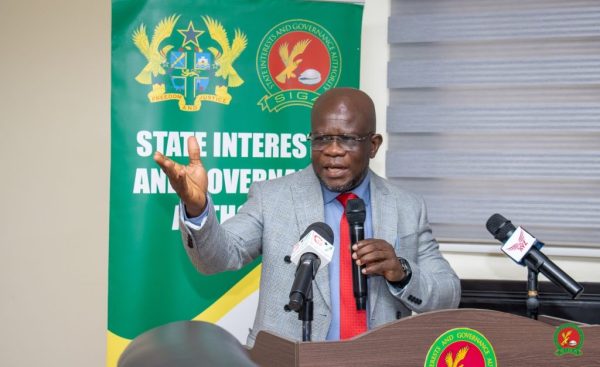
Prof. Michael Kpessa-Whyte, Director-General of SIGA
Dividend contributions from State-Owned Enterprises (SOEs) to the Government plunged by 45.5% in 2025, exposing persistent weaknesses in the profitability and cash-generating capacity of several state-owned companies.
The sharp decline, contained in the 2025 State Ownership Report by the State Interests and Governance Authority (SIGA), saw dividend payments from selected SOEs fall to just GH¢16 million in the 2025 financial year, from GH¢29.36 million in 2024.
The performance represents a significant drop in returns to the state at a time when the Government is under pressure to mobilise domestic revenue, strengthen fiscal consolidation and extract greater value from its investments in state-owned enterprises.
SOEs’ contribution remains marginal
The report said the GH¢16.0 million received from SOEs represented only 0.92% of the GH¢1.746 billion in total dividends received by the Government from institutional groups during the year.
The figures underline the relatively small contribution of SOEs to the Government’s overall dividend income, despite the substantial public resources invested in the state-owned portfolio.
Even more concerning, SIGA noted that only two SOEs paid dividends to the Government during the period under review.
The two companies were the Ghana Reinsurance Company Limited (Ghana Re), which paid GH¢13 million, and the Tema Development Company (TDC) Limited, which contributed GH¢3 million.
Ghana Re drives the decline
Ghana Re’s dividend payment fell sharply from GH¢25 million in 2024 to GH¢13 million in 2025.
That GH¢12 million reduction accounted for the bulk of the overall decline in SOE dividend receipts.
TDC, on the other hand, maintained its dividend contribution at GH¢3 million, the same amount it paid in the previous financial year.
SIGA commended the two companies for continuing to provide returns to the state, describing their performance as evidence of prudent financial management and operational resilience.
“Notably, TDC and Ghana Re demonstrated consistency in returning value to the shareholder through dividend payments,” the report stated.
Weak balance sheets constrain returns
Beyond the headline dividend decline, the report raised concerns about the financial health of several enterprises within the state-owned portfolio.
It noted that although some SOEs had recorded improvements in operational performance, a number continued to suffer from persistent balance-sheet weaknesses, including negative equity positions.
Among the entities identified as having negative equity were AirtelTigo Ghana Limited, Ghana Water Limited, GNPA Limited and Tema Oil Refinery.
The report said sustained losses and accumulated liabilities continued to undermine the capacity of some enterprises to generate shareholder value and pay dividends to the Government.
The situation means that improvements in day-to-day operations have not necessarily translated into stronger financial returns for the state.
Call for stronger profitability
SIGA has therefore been urged to intensify measures aimed at improving efficiency, strengthening corporate governance and restoring the financial sustainability of SOEs.
The report stressed that stronger dividend performance was necessary if state-owned enterprises were to make a more meaningful contribution to national revenue mobilisation.
It called for measures to improve profitability, compliance with dividend policies and cash-generation capacity, while ensuring that SOEs deliver better returns on public investments.
The concern is particularly significant given the scale of government exposure to state-owned companies and the fiscal pressures confronting the country.
Public investments must yield returns
The latest figures reinforce longstanding concerns over whether the state is receiving adequate financial returns from the enterprises it owns or controls.
While some SOEs have shown signs of operational improvement, SIGA’s assessment suggests that the broader portfolio continues to face structural financial challenges that limit its ability to reward the state as shareholder.
The decline from GH¢29.36 million to GH¢16 million means the Government received GH¢13.36 million less in dividends from the selected SOEs in 2025 than in the previous year.
For a Government pursuing fiscal consolidation and seeking additional sources of domestic revenue, the report places renewed emphasis on the need to turn state-owned enterprises into financially stronger and more reliable contributors to the national purse.
READ ALSO:Republic Bank gives 50 SCC youths a financial head start
The findings come as authorities pursue broader public-sector efficiency reforms aimed at improving the management of state assets, reducing fiscal risks and maximising the value of government investments.
The challenge, therefore, is no longer simply to improve the operational performance of SOEs, but to ensure that such improvements translate into sustainable profits, stronger cash flows and higher returns to the Government.
About The Author