Ghana’s economy grows: Will Ghanaians feel it?
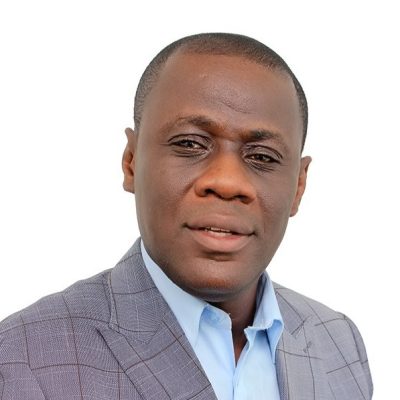
By Prof. Samuel Lartey
Introduction
Ghana’s economy is projected to rank among Africa’s eight largest in 2026. But what does that achievement mean for a market trader facing high operating costs, a graduate looking for work, a farmer seeking a fair price or a pensioner managing household expenses?
The answer lies not in the ranking alone but in whether stronger economic performance delivers jobs, affordable essentials, profitable businesses and reliable public services.
Ghana’s reported rise presents an opportunity for the Government’s fiscal reset agenda to translate national growth into improvements people can see and feel.
Understanding the figures
Reporting on the October 2026 International Monetary Fund World Economic Outlook places Ghana’s nominal gross domestic product at US$128.64 billion, compared with an earlier estimate of US$114.71 billion, and ranks the country eighth in Africa. The IMF’s October dataset independently confirms projected real economic growth of 5.7 percent for 2026, against a Sub Saharan African average of 4.5 per cent. Ghana recorded growth of 6.2 percent in the first half of 2026, according to IMF officials. These figures indicate momentum, not a guaranteed increase in every citizen’s income.
Why economic size is not the same as prosperity
The reported increase from US$114.71 billion to US$128.64 billion equals US$13.93 billion, or approximately 12.1 percent. This is not the economy’s real growth rate. Dollar denominated GDP also responds to exchange rates, domestic prices, statistical revisions and the measurement period. A stronger cedi can raise dollar GDP without equivalent additional production. Likewise, Africa’s rankings change as other economies and currencies move. Comparing consistent IMF data vintages is therefore essential before interpreting changes in rank or size.
Government: Put the fiscal reset to work
The Government’s reset agenda must sustain expenditure discipline while protecting investment in infrastructure, education, health and agricultural productivity. Bank of Ghana reporting shows that the first half of 2026 produced a fiscal deficit of GH¢9.9 billion, equivalent to 0.6 per cent of GDP, compared with GH¢21.4 billion or 1.5 percent a year earlier. A primary surplus of GH¢11.5 billion was recorded, although revenue collections remained below target. Public debt reached GH¢719.5 billion, or 45.0 percent of GDP, at end June. These numbers underline the need for stronger tax compliance, procurement transparency, expenditure efficiency and disciplined borrowing.
Businesses: Translate stability into production
For manufacturers and small enterprises, improved confidence matters only if credit, electricity, transport and predictable taxation become more affordable. Firms should improve financial records, productivity and export standards rather than assume headline GDP growth guarantees sales. Agro processing, light manufacturing, digital services and logistics can convert stronger demand into employment. Government should prioritise timely payments to contractors, reliable energy and measurable support for domestic value addition. Export growth is more durable when businesses sell processed products rather than depend predominantly on raw commodities.
Investors: Look beyond the headline ranking
For domestic and international investors, a larger market can strengthen opportunities in infrastructure, financial services, housing, agribusiness and technology. However, due diligence must test foreign exchange risk, debt sustainability, regulatory predictability, project cash flows and governance. Capital should favour enterprises generating productive assets, skilled jobs and export earnings. Rising nominal GDP is not a substitute for bankable projects, enforceable contracts or credible financial reporting. Diversification remains important because gold prices, cocoa conditions and international financing costs can shift quickly. Independent evaluation of public private partnerships, transparent investment incentives and strong dispute resolution would help investors distinguish sustainable opportunities from projects dependent on temporary macroeconomic optimism.
Households: Make growth visible at home
Households judge the economy through food prices, school fees, rent, healthcare and employment prospects, not international league tables. Lower inflation can slow price increases without returning prices to earlier levels. Families should build savings buffers, compare borrowing costs and invest in practical skills. Public policy should improve access to vocational training, targeted social protection and affordable essential services. Youth employment and purchasing power deserve attention alongside aggregate output, particularly when population growth dilutes gains in average income. For example, a market trader experiencing slower increases in wholesale prices may still struggle if transport costs, loan repayments and rent remain high. Economic policy must therefore measure actual family welfare, not merely improvements in national averages.
READ ALSO: Vivo Energy Ghana sweeps PR awards with 4 wins
Five priorities for shared prosperity
- Protect fiscal discipline while publishing measurable outcomes for every major public investment.
- Expand productive credit and reliable infrastructure for small businesses, farmers and exporters.
- Mobilise investment into processing, innovation and employment rather than speculative activity.
- Monitor household purchasing power, youth jobs and regional disparities alongside GDP.
- Strengthen data transparency so policymakers distinguish real growth, nominal GDP and exchange rate effects.
Conclusion
Ghana’s projected position among Africa’s larger economies creates an opportunity, not a certificate of collective prosperity. Success will be measured when fiscal responsibility finances better public services, investors build productive enterprises, businesses create decent employment, and households experience greater security. The national ambition should be clear: turn a larger economic figure into better livelihoods, stronger institutions and sustainable development for all.
About The Author