GoldBod CEO calls for fairer mineral investment partnerships
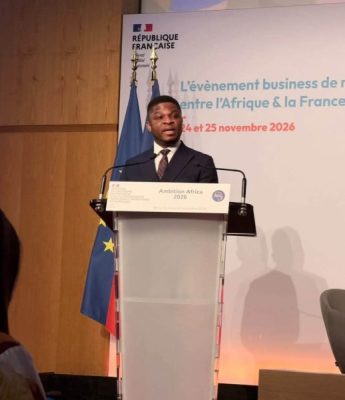
Mr Sammy Gyamfi, the Chief Executive Officer of the Ghana Gold Board (GoldBod), has called on European investors to partner Ghana in developing its mineral value chains through investments in refinery, jewellery manufacturing and responsible mining.
He said Africa needed a new partnership with global investors that guaranteed competitive returns for investors, while ensuring that mineral-producing countries retained greater value from their natural resources.
Speaking at the Ambition Africa conference in Paris, on the theme: “Africa’s Minerals, Africa’s Future – A New Pact for Investment, Economic Transformation and Shared Prosperity,” Mr Gyamfi said the continent’s mineral wealth must translate into jobs, industries and economic opportunities for its growing youth population.
He said more than 400 million young Africans aged between 15 and 35 represented the continent’s greatest resource, but only about 10 to 12 million entered the labour market annually, against the three million formal jobs created.
He described the situation as a paradox, where a continent rich in natural resources continued to struggle to create prosperity for its young population.
Mr Gyamfi said youth unemployment was not merely a labour-market problem but also a production challenge, resulting from limited industrial capacity, insufficient value addition, and inadequate long-term investment.
He said exporting raw minerals alone could not transform African economies, stressing the need to build industries and retain more economic value from mineral resources.
On Ghana’s efforts, he said under the leadership of President John Dramani Mahama, the establishment of GoldBod had helped bring significant volumes of Artisanal and Small-scale Mining (ASM) gold, previously lost through smuggling into the formal economy.
He cited a SWISSAID analysis which identified a 229-tonne gap, valued at US$11.4 billion, between Ghana’s reported gold exports and partner countries’ declared imports from 2019 to 2023.
Mr Gyamfi said official ASM gold exports increased from 63 tonnes in 2024 to 104 tonnes in 2025, generating about US$10.8 billion, while a further 85.4 tonnes, valued at US$11.6 billion, were exported between January and October 20, 2026.
He said the figures demonstrated that GoldBod had not created new gold production but had helped recover existing production previously diverted into informal channels and smuggling.
He said about 27 tonnes of ASM gold had been refined locally in Ghana in 2026, while the Board’s reforms had created approximately 5,000 direct jobs.
Mr Gyamfi said GoldBod was also pursuing the Ghana Gold Souk initiative to establish an industrial hub for jewellery manufacturing and fabrication, inviting investors to partner the country from 2027.
He said the Board welcomed investments in responsible mining, mercury-free gold processing, refinery, fabrication and trading, particularly those that created sustainable jobs and facilitated technology and expertise transfer.
He stated that Africa required capital, technology, expertise, and access to markets to achieve meaningful economic transformation, while governments had a responsibility to create an enabling environment for investment.
However, partnerships must ensure that African countries did not remain suppliers of raw materials, land and labour while processing technology and higher-value economic opportunities were concentrated elsewhere.
Mr Gyamfi urged European investors to collaborate with African businesses and governments to develop integrated mineral value chains that would generate competitive returns and promote shared prosperity.
About The Author