Mineral royalties projected to hit GH¢9bn in 2026
MIIF says strong first-half performance puts royalty receipts on course to surpass previous records Revenue from mineral royalties is projected to reach GH¢9 billion in 2026, following a strong performance in the first half of the year, the Minerals Income Investment Fund (MIIF) has disclosed.
The Fund recorded GH¢5.3 billion in mineral royalty receipts during the first half of 2026, putting it on course to exceed previous annual performances and strengthen the financial returns from Ghana’s mineral resources.
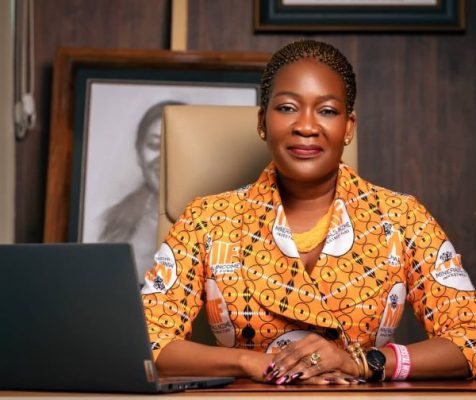
The Chief Executive Officer (CEO) of MIIF, Mrs Justina Nelson, disclosed this when the Chief Justice, Paul Baffoe-Bonnie, paid a courtesy call on the Fund in Accra as part of his institutional visits.
Mrs Nelson said the latest figures reflected ongoing efforts to improve the efficiency, profitability and strategic management of Ghana’s mineral revenues.
She said MIIF recorded a 5.4 per cent improvement in royalty performance in 2025, compared with 2024, while the Fund’s income for the year reached GH¢1.1 billion.
Royalty performance strengthens
According to Mrs Nelson, MIIF collected GH¢2 billion in royalties during the first half of 2025, with the significant increase recorded in 2026 demonstrating the Fund’s continued progress in mobilising and monetising mineral revenues for the state.
She said the performance formed part of a broader strategy to position state-owned institutions to operate with greater efficiency and profitability while ensuring that the country derived sustainable value from its mineral resources.
Beyond collecting mineral royalties, Mrs Nelson said MIIF had a broader mandate to invest in Ghana’s mining value chain.
The Fund, she explained, invested in the sector through equities, fixed-income instruments and alternative investments, with the objective of generating sustainable returns for the country.
She said MIIF was also paying increasing attention to environmental, social and governance (ESG) considerations within the mining sector.
In particular, she identified illegal mining, popularly known as galamsey, as a major threat to Ghana’s environment and water bodies, stressing the need for stronger measures to protect the country’s natural resources.
Judiciary support sought
Mrs Nelson also highlighted the potential role of the Judiciary in supporting the Fund as it expanded its investment activities.
She said judicial expertise would be valuable to MIIF, particularly in providing legal opinions and advice on the structuring of transactions and other investment arrangements.
She therefore welcomed stronger collaboration between the Fund and the Judiciary to ensure that its expanding investment activities were supported by sound legal and regulatory frameworks.
Chief Justice commends MIIF
Chief Justice Baffoe-Bonnie commended MIIF for its performance, saying the results demonstrated that effective management and prudent use of public resources could produce significant returns.
He expressed surprise at the scale of the Fund’s achievements relative to its statutory allocation.
“Two per cent has yielded so much. I don’t know how,” he said.
The Chief Justice urged the management of MIIF to sustain the approach that had produced the results, emphasising the importance of integrity, collaboration and a commitment to leaving a positive legacy in public service.
He said public institutions had a responsibility to manage state resources efficiently and ensure that their operations translated into tangible benefits for the country.
Specialised courts for galamsey
The Chief Justice also proposed the need for specialised courts to deal with illegal mining and related cases, saying the Judiciary could play a stronger role in national efforts to combat the menace.
He described illegal mining as a major national concern with serious implications for Ghana’s environment, water bodies and communities.
He called for stronger institutional collaboration to tackle the problem, noting that the fight against galamsey required coordinated action across the relevant state institutions.
MIIF backs stronger collaboration
The Board Chairman of MIIF, Mr Richard Kwame Asante, welcomed the proposal for specialised courts, saying illegal mining had significant environmental, economic and governance implications.
He said the scale and complexity of the galamsey problem required a coordinated national response involving all relevant institutions.
“At MIIF, we believe that the fight against illegal mining requires an all-hands-on-deck approach,” he said.
Mr Asante said the Fund remained committed to the principles of transparency, accountability, integrity, professionalism and respect for the rule of law in the management of public resources.
He said those principles were critical to ensuring that mineral revenues were managed in a manner that protected the interests of both present and future generations.
Maximising mineral wealth
MIIF was established under the Minerals Income Investment Fund Act, 2018 (Act 978), as amended, to manage and maximise the value of mineral royalty and dividend income accruing to Ghana.
Its mandate includes mobilising and monetising mineral royalties, supporting the government in addressing budgetary shortfalls and investing proceeds in the mining value chain to generate sustainable returns.
The Fund’s investment role is intended to enable Ghana to derive greater long-term value from its mineral resources beyond the immediate collection of royalties.
With mineral royalty receipts already reaching GH¢5.3 billion in the first six months of 2026, the projected GH¢9 billion annual revenue would mark another significant step in efforts to strengthen the state’s financial returns from the mining sector.
The performance also places renewed emphasis on the ability of institutions such as MIIF to convert Ghana’s mineral wealth into sustainable financial assets while addressing the environmental and governance challenges associated with mining.
About The Author