
Better data must drive better decisions – Dr Mumuni
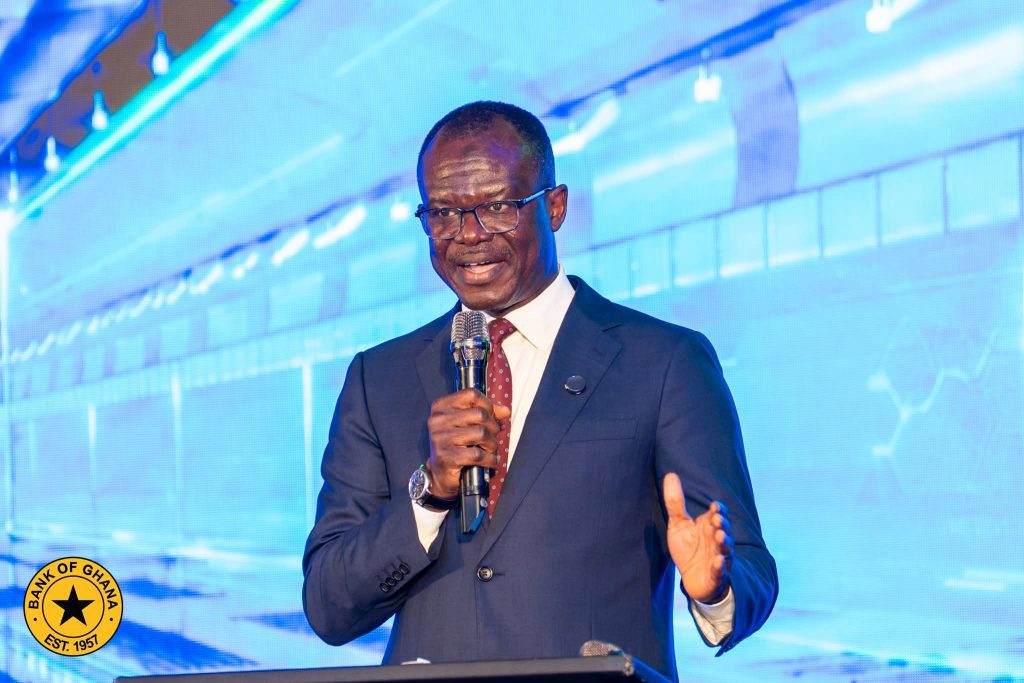
The Bank of Ghana (BoG) has called for stronger data quality, advanced analytics and closer collaboration between researchers and policymakers to improve economic decision-making and national development outcomes.
First Deputy Governor of the Bank of Ghana, Dr Zakari Mumuni, said the country’s ability to make sound policy decisions increasingly depended on the quality, relevance and timeliness of the data available to institutions.
“Better data. Better decisions. Better outcomes,” he said, outlining the three principles that should guide Ghana’s approach to statistics and data science.
Dr Mumuni made the call at the 4th Annual Statistics and Data Science Conference 2026, held under the theme, “Innovations in Statistics and Data Science: Research, Practice and Policy Impact.”
‘Bad data produces sophisticated garbage’
According to him, reliable policymaking begins with data collected accurately from the ground and subjected to rigorous validation.
He said at the BoG, research staff regularly travel across the country to track prices and conduct business and consumer confidence surveys, providing the Monetary Policy Committee (MPC) with a broader picture of economic conditions beyond Accra.
“No model rescues a forecast built on a thin foundation,” he cautioned, stressing that sophisticated analytical tools could not compensate for poor-quality information.
Dr Mumuni said the rapid development of artificial intelligence (AI) made data quality even more critical because machines could process vast quantities of information without necessarily determining whether the underlying data was accurate.
“Garbage in, garbage out. In the age of AI: Bad data in, very sophisticated garbage out,” he said.
He therefore emphasised the continued importance of proper sampling, measurement, classification, validation, metadata and revisions.
He also called for regular updating of statistical systems to reflect changes in the economy, including emerging sectors and evolving consumption patterns.
BoG expands AI, big data use
Dr Mumuni said the Bank was increasingly deploying technology to obtain economic intelligence faster and strengthen its policymaking capacity.
He cited the Bank’s use of AI and Big Data to develop its electronic inflation nowcasting methodology, known as e-Inflation, as well as machine-learning models to complement conventional econometric models in GDP forecasting and text-mining analytics.
According to him, technology was also transforming financial supervision by enabling regulators to work with more granular data and identify emerging risks earlier.
“What technology should do is close the gap between when something happens and when a policymaker knows about it,” he said.
He noted that digital payments, tax records and even satellite imagery could provide valuable early signals about consumer spending, business activity and agricultural conditions.
However, he cautioned against allowing technology to replace human judgment. “Technology can strengthen our intelligence, but it does not remove the need for human judgment,” he said. “People make policy.”
Research must influence policy
Dr Mumuni said the ultimate test of statistics and data science was not the volume of information collected or the sophistication of analytical models, but the quality of decisions and outcomes they produced.
He called for stronger cooperation among statisticians, economists, data scientists, technologists and policymakers, arguing that each discipline offered only part of the solution when working in isolation.
He also urged Ghanaian universities and public institutions, including the BoG and Ghana Statistical Service, to strengthen their links so that academic research could respond more directly to practical policy challenges. “Research should not only be about policy. It should increasingly be conducted with policy,” he said.
Three priorities for Ghana
The First Deputy Governor identified three priorities for the statistics and data science community: investing in data quality, embracing high-frequency and alternative data while maintaining statistical standards, and strengthening the connection between research and the practical questions confronting institutions.
READ ALSO: Debt Discipline: Ghana’s Promise to Its People
He said new sources of data should complement rather than replace properly weighted and nationally representative statistical measures.
Dr Mumuni stressed that research achieved its greatest value when it moved beyond publication into practice, policy and measurable impact.
“Statistics helps us measure reality. Data science helps us interrogate it. When these come together, data becomes intelligence,” he said.
He said Ghana’s future should not be one in which machines make decisions, but one in which better data guides better policymaking, evidence informs policy and innovation delivers meaningful national impact.
About The Author