
Cabinet Approves $250 Million AI Centre to Drive Ghana’s Digital Transformation
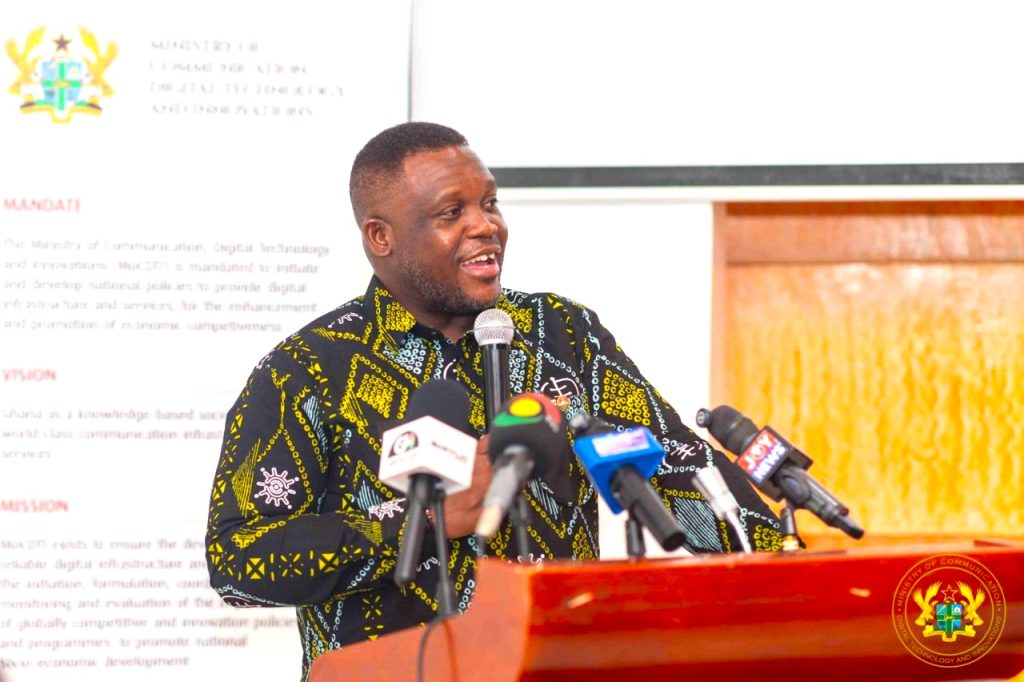
Ghana’s Cabinet has approved a $250 million investment to establish a national Artificial Intelligence (AI) Computer Centre, in a major step aimed at positioning the country as a leading hub for responsible AI innovation in Africa.
The initiative marks one of the most significant public investments in Ghana’s digital economy to date, signaling a clear transition from policy discussions to real infrastructure capable of powering next-generation technologies.
Announcing the development, Samuel Nartey George, Minister for Communication, Digital Technology and Innovations, said the project will anchor Ghana’s AI ecosystem by supporting research, development, and large-scale deployment across key sectors.
The announcement was made during a national stakeholder engagement on Ghana’s AI Readiness Assessment Methodology (RAM) Report in Accra, organized in collaboration with UNESCO and backed by the European Union.
From Vision to Infrastructure
At the heart of the government’s plan is the creation of a high-performance AI computing hub that will provide the technical backbone for innovation in agriculture, healthcare, education, and financial services.
The centre is expected to unlock data-driven solutions, improve service delivery, and accelerate digital entrepreneurship key pillars in Ghana’s long-term economic transformation agenda.
With mobile penetration exceeding 110 percent and more than 38 million active subscriptions nationwide, Ghana already has a strong digital base. The new AI infrastructure is designed to build on this momentum, enabling advanced technologies to scale efficiently.
“This marks a decisive step in Ghana’s path toward a responsible, innovative, and globally competitive Artificial Intelligence ecosystem,” the Minister stated.
National AI Strategy Set for Launch
In a parallel policy breakthrough, Cabinet has also approved Ghana’s National Artificial Intelligence Strategy, scheduled for launch on April 24, 2026.
The strategy outlines a comprehensive roadmap for integrating AI into all sectors of the economy while maintaining strong ethical standards and data protection safeguards.
Key focus areas include strengthening data governance systems, investing in research and computing infrastructure, expanding AI education and digital skills, and ensuring ethical oversight in deployment.
Together, the strategy and the AI Centre form a dual approach policy direction backed by infrastructure capacity—aimed at accelerating Ghana’s digital transformation.
Global Framework, Local Impact
Ghana’s AI agenda is being shaped by the Readiness Assessment Methodology developed by UNESCO, which provides a structured framework to assess national preparedness across governance, infrastructure, data ecosystems, and societal impact.
Arnold Kavaarpuo, Director-General of the Data Protection Commission, commended the initiative for prioritizing ethical AI use while preserving Ghana’s cultural and institutional values.
Similarly, Osman Tahidu-Damba described the framework as a rigorous tool for ensuring that AI development aligns with national priorities and delivers inclusive growth.
Strategic Position in Africa’s Digital Economy
Ghana’s ambitions extend beyond national borders. With the African Continental Free Trade Area Secretariat based in Accra, the country is strategically positioned to influence Africa’s emerging digital trade ecosystem.
Officials say this advantage places Ghana at the centre of cross-border digital innovation, offering opportunities to shape policy, standards, and technology adoption across the continent.
From Planning to Execution
The coming months will be critical as Ghana shifts from policy formulation to implementation. The rollout of the National AI Strategy, alongside the establishment of the AI Centre, is expected to drive increased investment in tech startups and innovation hubs, expand AI-driven public services, create new job opportunities in data science and digital technology, and strengthen regulatory frameworks to ensure the ethical use of artificial intelligence.
READ ALSO: Vivo Energy, KNUST sign MoU to train energy innovators
The Minister has called on researchers, startups, private sector players, and civil society to move beyond observation and actively contribute through partnerships and practical solutions.
What Lies Ahead
As Ghana moves to operationalize its AI agenda, attention will turn to execution funding deployment, infrastructure development, and stakeholder collaboration.
If successfully implemented, the initiative could redefine Ghana’s economic trajectory, shifting it toward a knowledge-based, technology-driven economy while setting a benchmark for responsible AI development across Africa.
About The Author