
Cedi slips as GSE trading surges 59.5%
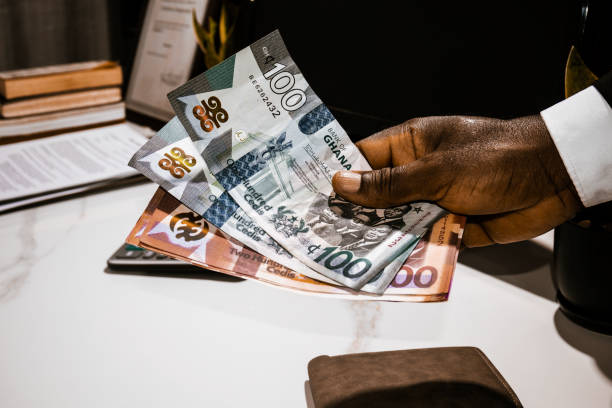
By ELVIS DARKO, Accra
Ghana’s financial markets recorded mixed movements in the week ended September 25, 2026, with demand for Treasury bills easing at the primary market, secondary fixed-income trading volumes increasing, the Ghana cedi weakening against the US dollar, and activity on the Ghana Stock Exchange (GSE) strengthening significantly.
According to Tesah Capital Research, investor demand for Treasury bills declined during the week, while interest rates on all three benchmark Treasury bills also fell.
At the same time, secondary market trading on the Ghana Fixed Income Market (GFIM) increased by 20.5% to GH¢6.94 billion.
The cedi, meanwhile, depreciated against the US dollar but strengthened marginally against the British pound and remained unchanged against the euro based on Bank of Ghana interbank midrates.
On the equities market, the GSE Composite Index ended the week at 13,886.74 points, representing a year-to-date return of 58.34%, as several listed companies recorded gains. Trading volumes also rose sharply by 59.52%.
Treasury demand falls
Tesah Capital Research said investor demand at the primary Treasury bill auction declined from GH¢3,956.06 million in the previous week to GH¢3,655.64 million during the week under review.
The Government had targeted GH¢2,751 million but received total bids of GH¢3,655.64 million, resulting in an oversubscription of 32.88%, according to the research firm.
The auction saw investors accept different proportions of the bills on offer. Of the 91-day Treasury bills, 90.54% were accepted, while 74.06% of the 182-day bills and 56.77% of the 364-day bills were accepted.
Despite the softer investor demand, yields across all three Treasury bill tenors declined.
Tesah Capital Research reported that the interest rate on the 91-day Treasury bill fell by one basis point to 4.68%.
The rate on the 182-day Treasury bill declined by 12 basis points to 6.37%, while the 364-day Treasury bill rate dropped by 15 basis points to 9.83%.
For the next auction, the Government is seeking to raise GH¢2,241.00 million, according to Tesah Capital Research.
Secondary market trading rises
While demand at the primary Treasury bill auction declined, activity on the secondary fixed-income market strengthened during the week.
Tesah Capital Research reported that trading volumes on the Ghana Fixed Income Market increased by 20.5% to GH¢6.94 billion.
Treasury bills dominated activity, accounting for 69.54% of total trading volumes.
Domestic Debt Exchange Programme (DDEP) bonds followed with a 22.38% share, while sell-buy-back transactions accounted for 7.64%.
Corporate bonds represented 0.36% of market activity, while New Government of Ghana notes accounted for 0.08% and Old Government of Ghana notes represented 0.01%.
The figures indicate that Treasury bills continued to be the principal instruments traded on the secondary fixed-income market during the week.
Cedi loses ground to dollar
The Ghana cedi weakened against the US dollar during the review period, according to Tesah Capital Research.
The local currency depreciated by 0.62% against the dollar to close at GH¢11.62 per US dollar, leaving its year-to-date depreciation at 10.09% based on Bank of Ghana interbank midrates.
Against the British pound, however, the cedi appreciated by 0.33% to close at GH¢15.40.
Despite the weekly appreciation, the cedi’s year-to-date position against the pound remained a depreciation of 8.69%.
The local currency was unchanged against the euro, closing at GH¢13.24, with a year-to-date depreciation of 7.34%.
Tesah Capital Research also reported indicative open-market midrates of GH¢11.70 to the US dollar, GH¢15.63 to the pound and GH¢13.44 to the euro at the end of the week.
GSE extends strong performance
The equities market recorded another positive week, with the GSE Composite Index closing at 13,886.74 points.
Tesah Capital Research said the index’s year-to-date return stood at 58.34%, supported mainly by gains in the share prices of SCB PREF, CPC, ETI, EGH, DIGICUT, CAL and GCB.
SCB PREF emerged as the biggest gainer among the top five performers, rising 10% to close at GH¢0.99, with its year-to-date return also standing at 10%.
CPC gained 8.33% to close at GH¢0.26, bringing its year-to-date gain to 420%. ETI increased by 5.62 per cent to GH¢1.69, with a year-to-date return of 119.48 per cent.
EGH rose 5.41 per cent to close at GH¢39.00, taking its year-to-date gain to 56%. DIGICUT also advanced by 4.76% to GH¢0.44, representing a year-to-date increase of 388.89%.
Decliners recorded
Tesah Capital Research also identified five stocks that recorded declines during the week. GLD was unchanged at GH¢462.38, although its year-to-date return remained negative at -3.67%.
FML declined marginally by 0.14% to close at GH¢14, despite maintaining a year-to-date gain of 75%.
ALLGH fell by 0.93% to GH¢5.30, with its year-to-date performance at -13.40%.
SOGEGH declined by 1.79% to close at GH¢5.50, although it remained up 22.49% year-to-date.
DASPHARMA recorded the largest decline among the listed stocks highlighted, falling by 2.46% to GH¢1.19. Its year-to-date return, however, remained strongly positive at 213.16.
Trading activity surges
Trading activity on the GSE increased substantially during the week. Tesah Capital Research said trading volumes rose by 59.52%, from 16.00 million shares to 25.53 million shares.
The total value of shares traded during the period was approximately GH¢145.82 million.
The increased turnover points to stronger activity among investors despite the mixed performance of individual stocks.
Looking ahead, Tesah Capital Research expects financial stocks and the information and communications technology (ICT) sector to continue playing important roles in determining the performance of the GSE Composite Index in the coming week.
Overall, the week ended September 25 presented a mixed picture across Ghana’s financial markets: Treasury demand moderated even as secondary fixed-income trading expanded, the cedi came under pressure against the dollar, and equities maintained their strong year-to-date performance amid a sharp increase in trading activity.
About The Author