
Gov’t to engage Burkina Faso over tomato export ban
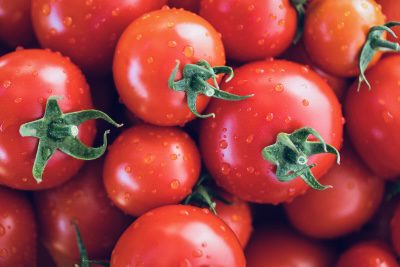
The Government of Ghana has announced plans to engage authorities in Burkina Faso following the latter’s decision to suspend the export of fresh tomatoes, a move expected to impact cross-border trade and local market supply.
A statement issued by the Ministry of Trade, Agribusiness and Industry indicated that the engagement would address concerns surrounding the directive and chart a mutually beneficial path forward for both countries.
The ban, which took effect on March 16, 2026, halts all exports of fresh tomatoes from Burkina Faso until further notice.
“We are calling on tomato traders to remain calm as efforts are underway to secure an amicable resolution,” the statement noted.
Burkina Faso moves to protect local processing industry
The directive was contained in a joint communiqué signed by Serge Gnaniodem Poda, Minister of Industry, Commerce and Artisanat, and Ismaël Sombie, Minister of State for Agriculture, Water, Animal and Fisheries Resources.
According to the communiqué, the suspension applies across the entire national territory and affects all economic operators involved in fresh tomato exports.
“The exportation of fresh tomatoes is suspended across the entire national territory until further notice,” the statement said, citing the need to ensure adequate supply for domestic processing units.
The issuance of Special Export Authorisations (ASE) has also been halted with immediate effect.
However, operators with existing valid permits have been granted a two-week window to complete pending export procedures, after which all authorisations will be rendered null and void.
Authorities warned that violations of the directive would attract sanctions under existing regulations, with any seized goods to be redirected to local industrial tomato processing units.
Impact on Ghana’s markets and trade flows
The development is expected to have ripple effects across the sub-region, particularly in Ghana, which maintains strong agricultural trade ties with Burkina Faso.
Northern Ghana, which relies significantly on cross-border supply of fresh produce, could face tightening supplies and potential increases in tomato prices in the coming weeks.
The policy shift reflects Burkina Faso’s broader strategy to strengthen its agro-processing sector and reduce reliance on raw commodity exports—an approach that has gained momentum under the transitional administration led by Ibrahim Traoré.
Gov’t eyes local production boost
In response, the Ghanaian government has reiterated its commitment to boosting domestic tomato production through initiatives such as the
‘Feed Ghana’ and ‘Feed the Industry’ programmes.
These programmes are aimed at increasing output to meet local demand and reduce reliance on imports and cross-border supply chains.
The government also called for cooperation among stakeholders in the tomato value chain, as well as support from border control agencies and security services, to ensure stability in the market while diplomatic efforts continue.
About The Author