
IFS urges review of mining concessions ahead of 2027 Budget
By SELORM GBORBIDZI, Accra
Ahead of the presentation of the 2027 national budget, the Institute for Fiscal Studies (IFS) to take more active steps to boos revenue generation in the country, which has remained historically low when compared to other nations on the continent.
The Institute has therefore suggested a number of measure which can be taken in the immediate term to boost how much revenue the country draws in.
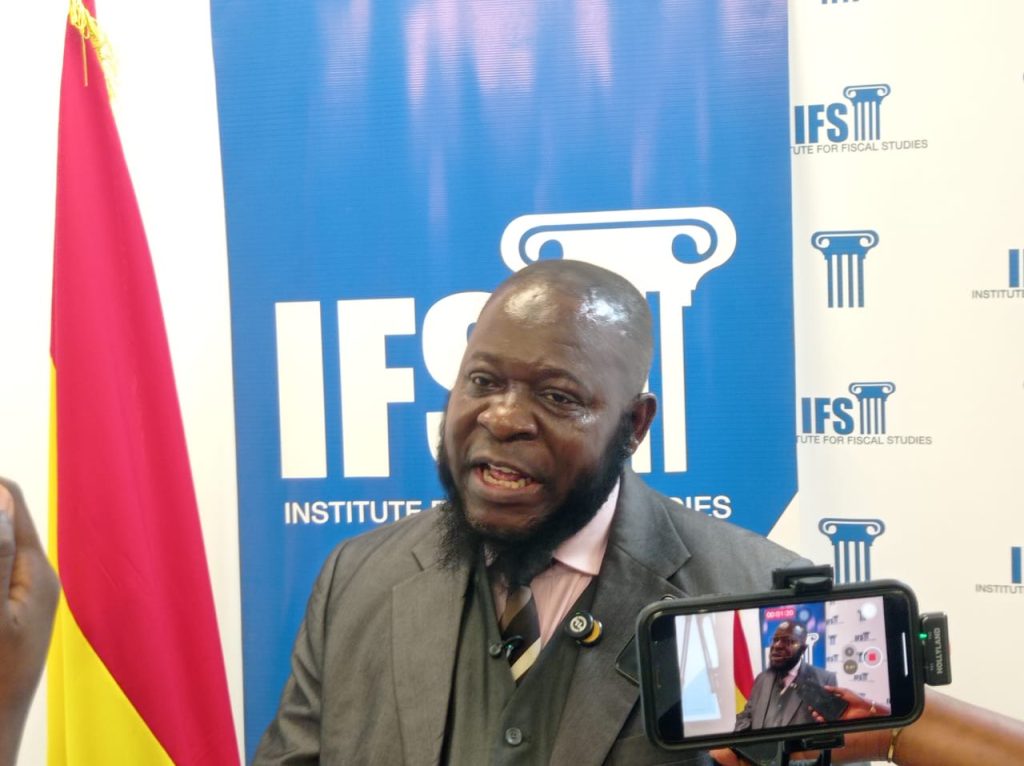
Fiscal Policy Researcher at the Institute, Dr Said Boakye, who addresserad the media yesterday on the theme ‘a reexamination of the low government revenue mobilisation in Ghana,’ suggested that government take a more active interest in Ghana’s extractive sector to generate more money for the state.
Drawing parallels with the diamond-producing Botswana, Dr Boakye suggested that government partner with private investors to boost government’s extractive sector revenues.
To fund this approach, he suggested that government scale back on its traditional public investment programmes such as infrastructure development for a while to enable it direct its funds towards investing in the extractive sector, so as to generate more revenue which can then be channeled towards physical development projects.
The IFS also suggested that government could go into production sharing agreements in lieu of the current concession regime being employed since that has proven to be a better alternative for revenue generation in the sector.
Dr Said Boakye again suggested that government review all existing tax exemption agreements in the country and cancel all those that do not make economic sense. He argued that the existing exemptions regime has been abused over the years to the detriment of the nation’s revenue generation goals.
“Mere contributions to GDP,” he said, “should not serve as a justification for continuous loss of government revenue through exemptions, since contributions to GDP, unlike to GNP (gross national product), may not necessarily benefit Ghanaians.”
He cautioned government against over-reliance on tax exemptions and incentives to attract foreign direct investment since studies have shown that persistent improvements in the macroeconomic and political environment are the main attractors of investment.
The IFS also called on government to “resolutely fight corruption” in the country, especially in tax and non-tax revenue collection agencies if Ghana is to double its current 15 percent total revenues and grants to GDP ratio, to about 30 percent.
They also urged government to adopt a “carrot and stick” approach by rewarding revenue collection agencies and personnel for their good actions while quickly punishing those undermine revenue generation efforts.
About The Author