Mahama touts GoldBod gains to African countries
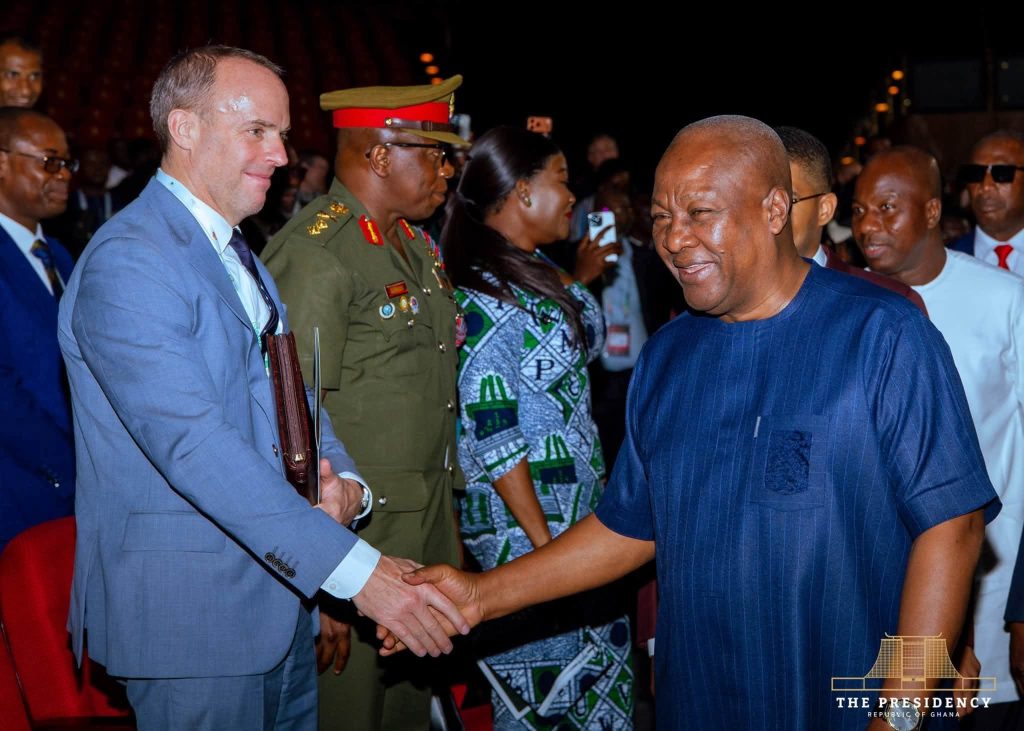
President John Dramani Mahama has touted the impact of the Ghana Gold Board (GoldBod), established under his administration, following a 62.5 per cent increase in artisanal and small-scale mining (ASM) gold exports to 104 tonnes in 2025 from 64 tonnes in 2024.
The 40-tonne increase was a significant achievement, particularly as GoldBod commenced operations in April 2025, with the 104 tonnes recorded between April and December, he said.
Foreign exchange earnings from regulated small-scale gold exports also rose from US$4.66 billion in 2024 to US$10.8 billion in 2025, an increase of US$6.14 billion, or approximately 131.8 per cent.
President Mahama attributed the performance to GoldBod’s role in regulating and formalising small-scale gold trading, highlighting the sector’s growing contribution to Ghana’s foreign exchange earnings.
“I wish to commend the GoldBod for the successes that it has chalked. In 2024, from the artisanal and small-scale mining sector, Ghana exported 64 tonnes of gold,” he said.
He was speaking at the Mining in Motion Conference 2026 in Accra, held on the theme: “One Continent, One Voice of Minerals – Aligning Africa’s Mineral Future.”
GoldBod boosts regulated exports
Established under the Ghana Gold Board Act, 2025 (Act 1140), GoldBod is mandated to regulate and develop the country’s gold trading industry, formalise artisanal and small-scale mining gold transactions and support foreign exchange generation.
The export figures cited by the President highlight the growing importance of the regulated small-scale mining channel to Ghana’s gold trade. They also come amid efforts to address informality and gold smuggling while improving accountability in the sector.
The increase in foreign exchange earnings reflects both the growth in export volumes and changes in the value of gold sold, although the figures provided do not separate the contribution of each factor.
The government expects stronger oversight of gold purchases and exports to improve transparency and ensure that more of the value generated from the country’s mineral resources benefits the domestic economy.
Africa must process its minerals
Beyond Ghana’s gold export performance, President Mahama called for stronger regional cooperation to enable African countries to process more of their mineral resources domestically and retain a greater share of the value generated from them.
He said Ghana’s efforts to move beyond exporting raw minerals would be more effective if aligned with similar initiatives in neighbouring countries and across the continent.
The President identified Agenda 2063, the African Mining Vision and the African Continental Free Trade Area (AfCFTA) as frameworks for coordinating investments, developing regional infrastructure and expanding markets for African mineral producers.
“We must translate these frameworks into coordinated investments, regional infrastructure and larger markets for African producers. As Ghana prepares to assume the chairmanship of the African Union in 2027, we will carry the spirit of the Accra Research into this collective effort,” he said.
He said closer cooperation would help African countries mobilise the investment, technical expertise and market access needed to develop mineral-processing industries capable of competing internationally.
President Mahama also highlighted the role of the African Minerals Development Centre (AMDC), established to oversee the implementation of the Africa Mining Vision, in helping countries build the institutional and technical capacity required to develop mineral-processing arrangements.
He urged African Union member states that had not ratified the AMDC statutes to do so and deposit their instruments of ratification with the African Union as soon as possible.
“We must support the AMDC with dependable funding, technical expertise and clear expectations for delivery. It can help our countries share geological knowledge, strengthen negotiating capacity, and develop regional value chains,” he added.
The President’s proposal reflects a broader continental push to move beyond extracting and exporting raw materials towards processing, manufacturing and other higher-value activities that can generate employment, expand industrial capacity and increase government revenues.
For Ghana, this would mean complementing gold export earnings with stronger domestic processing and more extensive linkages between mining and the wider economy.
Unfair mineral agreements drain Africa
President Mahama also criticised the historical pattern of mineral concessions and negotiations that, he said, had left African countries with only a small share of the wealth extracted from their natural resources.
He argued that weak negotiating capacity and the award of large mineral concessions to foreign interests had contributed to substantial financial outflows, while African countries and mining communities continued to grapple with poverty and economic hardship.
He said the situation reflected a colonial-era legacy in which the extraction of Africa’s resources did not necessarily translate into commensurate prosperity for its people.
“This legacy of the colonial era accounted for much of the poverty and suffering experienced across the continent,” he said.
The President called for African governments to strengthen their negotiating capacity, secure more favourable terms in mining agreements and ensure that mineral wealth supports long-term economic development.
READ ALSO: Mining, manufacturing push producer inflation to 4.8%
Achieving that objective, he said, would require better geological knowledge, stronger technical expertise, coordinated investment priorities and regional value chains capable of retaining more economic value within Africa.
He also stressed the importance of creating larger markets for processed minerals, noting that individual countries could struggle to attract investment in some processing industries without adequate supplies, infrastructure and demand.
As Ghana prepares to assume the African Union chairmanship in 2027, President Mahama said the country would seek to advance a collective continental approach to mineral development.
His remarks linked Ghana’s efforts to strengthen oversight of gold exports through GoldBod with a wider ambition to ensure that African countries capture a greater share of the economic value generated by their natural resources.
About The Author