
Disclose GoldBod’s buyers, discounts, contracts — NPP
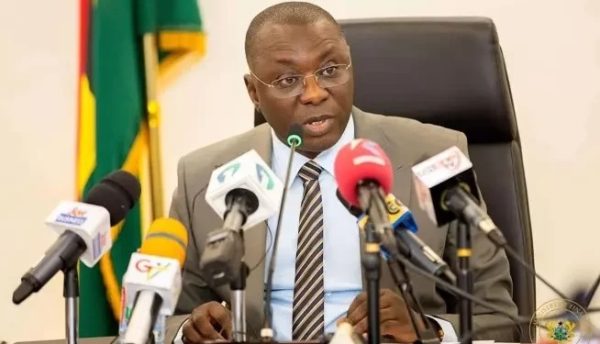
Dr Mohammed Amin Adam
By ELVIS DARKO, Accra
The opposition New Patriotic Party (NPP) has demanded full disclosure of the foreign companies buying Ghana’s gold through the Ghana Gold Board (GoldBod), including the contracts, discounts, pricing arrangements, financing structures and other commercial terms governing the transactions.
The party says the disclosures are necessary to establish whether Ghana is receiving fair value for its gold and to account for the reported losses associated with the Domestic Gold Purchase Programme (DGPP).
Former Finance Minister and member of the NPP’s Policy Coordinating Committee on Finance and Economy, Dr Mohammed Amin Adam, made the demand at a press conference in Accra on Tuesday, September 1, amid an intensifying political dispute over GoldBod’s financial performance and the reported US$1.7 billion loss under the gold purchase programme.
He questioned why GoldBod had not publicly identified the companies purchasing Ghana’s gold, particularly given the volume and value of bullion being traded through the state-backed programme.
“Where did our gold go? All the gold they sold, where did that go?” Dr Amin Adam asked, insisting that the identities of the foreign buyers and the commercial arrangements governing their purchases should be made public.
“We want to know the names of the foreign buyers of Ghana’s gold, the discount and commercial terms they were given. Those contracts must be published,” he said.
NPP questions gold discounts
According to the former Finance Minister, the absence of information on the buyers and transaction terms has made it difficult for Ghanaians to independently assess the value obtained from the country’s gold.
He said GoldBod exported about 103.8 tonnes of gold sourced from small-scale miners in 2025, with approximately 98.8% reportedly destined for India and Dubai.
Dr Amin Adam alleged that the speed of payment offered by buyers in those markets came at a cost, with purchasers demanding substantial discounts that reduced the value Ghana realised from its gold.
“Gold Board had to provide huge discounts, which resulted in Ghana not receiving US$450 million. And this is one of the losses recorded,” he said.
He argued that the public could not properly assess the reported losses without seeing the underlying contracts and understanding how prices, discounts, settlement periods and other commercial terms were negotiated.
The NPP’s demand extends beyond the identification of buyers. It wants the Government to publish the agreements governing GoldBod’s gold purchases and subsequent sales, arguing that such information is essential to determine whether the state obtained commercially reasonable terms.
Concern over foreign buyer financing
Dr Amin Adam also raised concerns about reported plans to allow foreign buyers to pre-finance gold purchases.
He argued that such an arrangement could increase the bargaining power of buyers and potentially lead to deeper discounts on Ghana’s gold.
“Allowing foreign buyers to pre-finance purchases of gold would deepen the very discounts that have been draining value from the programme,” he alleged.
He also questioned the financial implications of replacing central bank financing with commercial bank funding.
According to him, financing through commercial banks would introduce interest and guarantee costs that did not apply to the Bank of Ghana’s previous interest-free financing arrangement.
“Financing through commercial banks, as we now know they are doing, brings interest and guarantee costs because commercial banks will charge them. The Bank of Ghana pre-financed them interest-free. It is not going to be the same,” he stated.
The NPP is consequently demanding clarification from Finance Minister Dr Cassiel Ato Forson on whether Government intends to guarantee the new financing arrangements and, if so, the legal authority under which such guarantees would be issued.
“We are asking the Finance Minister whether the Ministry will guarantee this new financing and under what legal authority,” Dr Amin Adam said.
GH¢133bn GoldBod-BoG transfer questioned
The former Finance Minister also demanded publication of the agreement governing the reported transfer of approximately GH¢133 billion in central bank funds through GoldBod.
He said the public had yet to see the agreement between GoldBod and the Bank of Ghana and questioned the terms under which the funds were made available.
“We have not seen that agreement. What are the terms between GoldBod and the Bank of Ghana?” he asked.
The NPP wants the Bank of Ghana, GoldBod and the Ministry of Finance to produce a signed reconciliation of the financial transactions associated with the gold operations.
The reconciliation, according to the party, should explain discrepancies in reported figures and establish precisely how public funds were received, deployed, accounted for and recovered through the gold purchase programme.
Dr Amin Adam maintained that the documents being requested already exist and that several of them should be available to the public under Ghana’s legal and public financial reporting requirements.
US$1.7bn loss under scrutiny
The demands come against the backdrop of controversy over the reported US$1.7 billion loss associated with the DGPP in 2025.
The issue has become a major point of contention between the NPP and the Government, with Minority Leader Alexander Afenyo-Markin and GoldBod Chief Executive Officer Sammy Gyamfi publicly exchanging positions over the financial performance of the programme.
Dr Amin Adam said the controversy cannot be resolved through competing political claims alone and that the underlying records must be made available for independent scrutiny.
He cited an estimated US$11.4 billion worth of small-scale mining gold allegedly smuggled out of Ghana between 2019 and 2024, arguing that the lack of transparency over legitimate gold transactions could undermine the distinction between regulated trade and illicit exports.
“Yet, we cannot tell who bought Ghana’s gold. We cannot tell. How different is it from smuggling? Because in both cases, you don’t know who bought the gold,” he said.
He challenged GoldBod to demonstrate that its operations are fundamentally different from the opaque channels associated with illegal gold trading by disclosing the identities of its buyers.
“So if this is different, then we should see transparency. Who bought Ghana’s gold?” he asked.
NPP challenges GH¢5.45bn surplus
Dr Amin Adam also challenged GoldBod’s reported GH¢5.45 billion surplus for 2025, arguing that the figure does not present a true picture of the institution’s trading performance.
He said GH¢4.54 billion, representing about 81.7% of the reported surplus, was a government capital injection credited to GoldBod’s books on December 30, 2025—only a day before the close of the financial year.
According to him, the funds were described in GoldBod’s accounts as revolving trade capital and therefore should not be treated as revenue.
“Standard public sector and international accounting rules treat money put in by an owner as capital, not revenue, and GoldBod’s own statements describe it as revolving trade capital,” he said.
Dr Amin Adam argued that presenting the capital injection as revenue could give the public an inflated impression of GoldBod’s financial performance.
“It cannot be capital when that is convenient and revenue when there is something to celebrate,” he stated.
He is therefore calling for GoldBod’s 2025 financial statements to be restated to remove the GH¢4.54 billion capital injection from revenue.
Questions over fee income
The former Finance Minister said that after excluding the disputed capital injection, the remaining GH¢909.9 million of the reported surplus was largely attributable to fee income.
He put the fee income at approximately GH¢827 million, describing much of it as service charges paid to GoldBod by the Bank of Ghana in connection with the same gold purchase operations.
“Almost all of GoldBod’s real income was therefore a commission charged on a programme that lost the country GH¢22 billion,” he said.
He questioned how GoldBod could report a surplus while the institution whose funds were being used to finance the gold purchases recorded a substantial loss.
“How does a gold buying operator record a surplus while the institution whose funds it is using records a loss?” he asked.
The NPP’s position is that the financial relationship between GoldBod and the Bank of Ghana must be fully disclosed before the public can properly assess the profitability or otherwise of the gold purchase programme.
Refiners and market access
Dr Amin Adam also warned that Ghana could face serious financial consequences if it lost access to major international refiners or encountered restrictions from the London Bullion Market Association (LBMA) over concerns about the sourcing and traceability of its gold.
He argued that any restrictions affecting Ghana’s access to established international gold markets could potentially cost the country more than the US$1.7 billion in disputed losses currently under discussion.
The warning adds another dimension to the transparency debate, with the former Minister arguing that the credibility of Ghana’s gold supply chain has implications not only for immediate sale prices but also for the country’s long-term access to international markets.
He also criticised the Government’s decision to scrap the 1.5% withholding tax on unprocessed gold purchased from small-scale miners, arguing that the policy could have implications for revenue mobilisation and accountability within the gold sector.
Transparency demand grows
At the heart of the NPP’s demands is a call for greater transparency over the entire gold value chain—from purchases from small-scale miners to financing, aggregation, refining and final export.
The party wants the Government to disclose the names of foreign buyers, transaction contracts, discounts, pricing mechanisms and financing arrangements.
It is also demanding the GoldBod-Bank of Ghana agreement and a formal reconciliation of the funds involved.
READ ALSO: GCAA workers seek Mahama’s intervention over intimidation
The political significance of the controversy is considerable because GoldBod has become a central instrument in the Government’s strategy to formalise the small-scale gold sector, reduce smuggling and retain a greater share of Ghana’s gold value within the domestic economy.
For the NPP, however, the success of that strategy cannot be measured simply by the volume of gold purchased or the revenue reported by GoldBod.
The party argues that the ultimate test is whether Ghana is obtaining fair value for its natural resources and whether every cedi and dollar involved in the transactions can be accounted for.
The controversy therefore places increasing pressure on GoldBod and the Government to open their records to public scrutiny and demonstrate that the country’s gold resources are being traded under transparent, commercially defensible and financially sustainable arrangements.
About The Author