Galamsey liabilities eroding Ghana’s economic future – IMF
By ELVIS DARKO, Accra
The International Monetary Fund (IMF) has warned that the environmental destruction associated with uncontrolled artisanal and small-scale gold mining (ASGM) could create economic liabilities that outlast the gold being extracted.
In its Country Report on Ghana dated August 2026, the IMF said the ASGM sector remains an important source of income, employment and foreign exchange, but warned that environmental degradation linked to mining threatens valuable natural and productive assets.
The Fund identified agricultural land, freshwater resources, ecosystems and rural livelihoods among the assets at risk, saying continued degradation could have wider economic consequences through lower agricultural productivity, higher water-treatment costs, increased public-health expenditure and greater exposure to climate-related shocks.
The IMF’s assessment suggests that the long-term economic cost of environmental degradation could substantially exceed the immediate economic benefit derived from gold extracted from degraded areas.
The hidden cost of gold
According to the IMF, the rapid expansion and mechanisation of ASGM, particularly activities outside the legal and environmental regulatory framework, has turned the sector into a significant environmental and economic challenge.
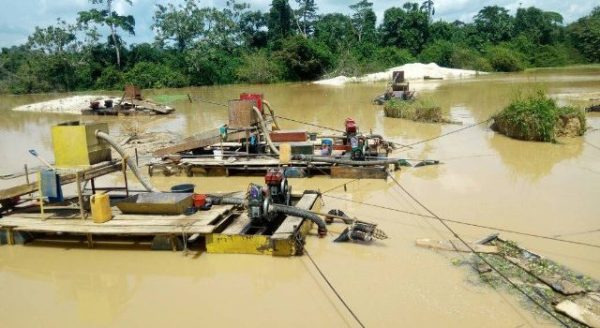
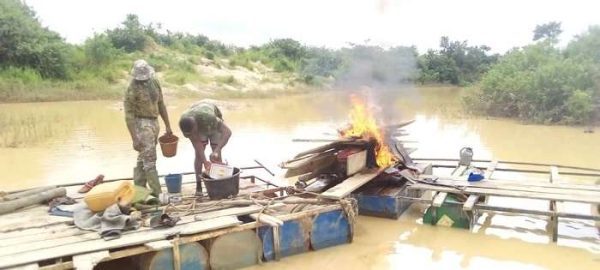
The Fund said the visible consequences include the destruction of farmland and forests, pollution of rivers and abandonment of mining pits. However, it noted that the deeper economic concern is the cost of restoring these assets after mining activity has ended.
A degraded farm cannot immediately return to production, while polluted rivers and damaged watersheds may require considerable time and resources to rehabilitate, the IMF said.
The Fund therefore argued that the economic assessment of gold mining should extend beyond the value of gold produced to the productive capacity potentially sacrificed in the process.
Agriculture and cocoa under pressure
The IMF identified agricultural productivity as one of the major areas exposed to the consequences of environmental degradation from mining.
Mining activities remove vegetation, expose soils to erosion and leave behind pits, waste heaps and severely disturbed land, the Fund said. Without effective reclamation, such land can become difficult and expensive to restore for agricultural use.
According to the IMF, agriculture remains an important source of employment, household income and food security, particularly in rural communities. The conversion of productive farmland into mining sites therefore represents a loss of agricultural capital.
The Fund said the consequences could be particularly significant for cocoa-producing areas.
Cocoa provides export earnings, foreign exchange and rural incomes, and the destruction or abandonment of cocoa farms means the loss of both current production and future productive capacity, the IMF said.
The Fund noted that replacing mature cocoa trees is not immediate because land must first be reclaimed and replanted, followed by several years before new plantations become productive.
Widespread degradation of cocoa-growing areas could consequently weaken export earnings, increase exposure to commodity shocks and deepen poverty in affected rural communities, according to the IMF.
Food security and water costs
The IMF also linked the loss of agricultural land to wider food-security and import risks.
Food production depends on productive land, reliable water supplies and functioning ecosystems, the Fund said. Continued degradation could reduce domestic agricultural output and increase dependence on food imports.
According to the IMF, increased food-import requirements could place additional pressure on foreign exchange while exposing consumers to international food-price volatility.
The Fund also identified polluted water bodies as a significant economic concern. Mining-related siltation and contamination can affect rivers and other water sources used for domestic supply, the IMF said. When raw water becomes heavily polluted, greater expenditure may be required for treatment, chemicals, maintenance and related infrastructure.
The resulting costs could ultimately affect utility charges or increase the need for government support, according to the Fund.
Industries dependent on reliable and affordable water could also face higher production costs, reduced competitiveness and constraints on expansion, the IMF warned.
Climate and energy risks
The IMF said environmental degradation could also weaken Ghana’s resilience to climate shocks.
Forests, wetlands, healthy soils and watersheds perform functions that help absorb water, regulate flows, prevent erosion and retain moisture, the Fund noted.
Their degradation could increase vulnerability to flooding and drought, according to the IMF. Mining-related erosion and runoff can worsen flood risks during heavy rainfall, while degraded soils and ecosystems may retain less moisture during dry periods.
The Fund warned that replacing lost natural protection with engineered infrastructure could impose additional costs on government and divert resources from other development priorities.
Mining-related erosion and sedimentation can also affect waterways and reservoirs, the IMF said. Over time, sedimentation could reduce reservoir storage capacity and affect hydropower operations.
Given Ghana’s dependence partly on hydropower, the Fund said any weakening of hydropower efficiency could increase reliance on alternative generation, with implications for electricity costs and exposure to fuel-price and foreign-exchange risks.
Health and fiscal burden
The IMF also identified public health as another potential economic cost. Mining-related pollution can expose communities to contaminated water and hazardous substances, including mercury and other chemicals used in gold processing, the Fund said.
Greater exposure could increase expenditure on diagnosis, treatment, surveillance and environmental-health interventions, according to the IMF.
The Fund noted that households could also bear costs through lost working days, reduced incomes and disruption to children’s education.
If contaminated land and water remain untreated, the IMF said some of these costs could persist after mining has stopped, creating longer-term and potentially intergenerational liabilities.
The Fund also linked the degradation of agricultural land and rural livelihoods to increased migration to urban areas, potentially placing additional pressure on housing, transport, sanitation, healthcare and water infrastructure.
Responsible sourcing and enforcement
The IMF said the issue also has an international dimension as global gold markets place increasing emphasis on responsible sourcing, traceability and environmental and social standards.
The Fund warned that if gold associated with illegal mining and environmental destruction enters legitimate supply chains without adequate traceability, Ghana could face reputational risks, greater international scrutiny and potential implications for market access.
The IMF said Ghana therefore needs stronger systems to ensure that gold entering formal supply chains is backed by credible traceability and responsible-sourcing arrangements.
The Fund also stressed that addressing the problem requires more than periodic enforcement operations.
According to the IMF, Ghana needs a comprehensive approach combining enforcement, formalisation, environmental restoration and alternative livelihoods.
This should include pathways for legitimate artisanal miners to operate within the formal economy, supported by legal concessions, appropriate technology and regulated markets, while environmental standards and sanctions are effectively enforced.
The IMF also emphasised reclamation, saying restoration should be viewed as an investment in productive capacity. Rehabilitated land can return to agriculture, restored waterways can recover their economic value, while forests and watersheds can strengthen resilience to climate shocks.
Protect wealth beyond gold
The IMF’s assessment places the economic cost of galamsey in the context of what Ghana gives up when natural assets are degraded.
A gold deposit provides a finite resource, while productive agricultural land, clean water, healthy ecosystems and functioning watersheds can support economic activity over much longer periods.
The Fund’s warning is therefore that the value of gold extracted today must be weighed against the productive capacity lost through environmental destruction.
READ ALSO:President Mahama inaugurates Independent Fiscal Council
Without stronger regulation, effective enforcement, reclamation and alternative livelihoods, the IMF said Ghana could face lower agricultural productivity, weaker export capacity, greater food-import dependence, higher water-treatment and public-health costs, increased climate-related losses and mounting environmental liabilities.
The IMF’s assessment ultimately points to a broader measure of economic wealth: Ghana’s gold economy cannot be judged only by the volume of gold produced or the foreign exchange earned. It must also account for whether the country is preserving the land, water, ecosystems and livelihoods that underpin future economic growth.
About The Author